
 Why do Black people want reparations for slavery?
Wasn't 600,000+ White Union Soldiers dying in the Civil War reparation enough?
-
Adult Design
HTML5 programming, Wordpress, Paysite Design, Logo Design & branding, Motion graphics, Tutorial Videos, Motion Advertisement's, 3D and 2D animation -
It's not "black people". Its "some people" of all colors.
I've never met a black person who gave a fuck. I have met white guilt folks who did. I've even argued for it. Black people looking at me crazy.
Just another weird alt-right tool to demonize blacks right now. Thats the environment we in. -
or the trillions in welfare.Comment
-
b cuz how else u gon git paid?Unvaxxed, still alive.Comment
-
They want it because it triggers you OP..In November, you can vote for America's next president or its first dictator.Comment
-
just a bunch of dem candidates pandering for the black vote as usual.Comment
-
I have no idea what you talking about. This ain't the 50s no more. Yall the ones crying about making things great again, not black people.
Of course theres still a lot of areas where shit aint great yet. Its a long road. But yall the ones trying to move backwards. Not the melanated folks.Comment
-
Jewish and Japanese American Reparations:
Political Lessons for the Africana Community
ricardo rené laremon
Japanese american reparations act
The Civil Liberties Act of 1988 is a United States federal law that granted reparations to Japanese Americans who had been interned by the United States government during World War II.
JAPANESE AMERICANS' FIGHT FOR POST-INTERNMENT REPARATIONS OFFERS A BLUEPRINT FOR TACKLING INEQUALITY IN THE TRUMP ERA
Three decades after their movement garnered a government apology for their wartime incarceration, Japanese-American community leaders are still battling for civil liberties for all Americans.
https://psmag.com/social-justice/jap...-the-trump-era
https://muse.jhu.edu/article/14641/pdf
US distributes further $30m to survivors of France Holocaust train deportations
https://www.timesofisrael.com/topic/...t-reparations/
Holocaust Survivors And Victims' Families Receive Millions In Reparations From France
https://www.npr.org/2019/02/07/69237...=1560965660609
The Mossad Hunt For Nazis
https://www.haaretz.com/israel-news/.premium-how-israel-tried-and-failed-to-capture-dr-josef-mengele-1.5449350
The Hunt for the Nazi 'Angel of Death': How Israel Tried – and Failed – to Capture Dr. Josef Mengele
The Daring Israeli Spy Operation to Capture Nazi Mass Murderer Adolf Eichmann
https://www.history.com/news/adolf-e...t-trial-mossad
After World War II, both West Germany and East Germany were obliged to pay war reparations to the Allied governments, according to the Potsdam Conference. Other Axis nations were obliged to pay war reparations according to the Paris Peace Treaties, 1947.Comment
-
A Native American Tribe Gets Rent as Reparations in Seattle
https://www.citylab.com/equity/2019/...wamish/589093/
5 NATIVE AMERICAN FUNDING FACTS
5 Native American Funding Facts | PWNA Media Kit for Press - Partnership With Native Americans
Reparations Are Rare in America, but They Have Been Paid Before
https://www.nytimes.com/2019/06/19/u...s-history.html
Elizabeth Warren opens door to reparations for Native Americans
https://www.bostonglobe.com/metro/20...uJJ/story.html
https://nypost.com/2019/02/23/elizab...n-reparations/Comment
-
Reparations should only be paid to people who suffered. I'm sorry but the great grandchild of someone who suffered isn't due anything.
Then we can argue who should pay. Why should the United States pay anything? We didn't create slavery; It was an accepted practice at the time (which is a horrible thing to say). We also did more than any other nation to end slavery.Herschel Savage
Brooklyn, NYComment
-
This is the future that awaits Whites, unless we take action.
Endless reparations, generation after generation, while the (((slave ship owners))) get off scot free.Comment
-
None of it matters. Whites will still have the power and blacks will still be pushing the same victim cards crying about whites.Comment
-
Because the non-whites will aggregate and take what they perceive as revenge.
Even if you take history out of the picture, it's little things like different hair colors and different eye colors. In many ways, non-whites are bigger white supremacists than whites, because they see whiteness as an obstacle they need to overcome.
Race is real, and it has real consequences. If you're white and you're willing to become a minority in your own homeland, then good for you, but do it away from me
Comment
-
Reparations are ridiculous. We can all recognize what happened, but what is paying someone for the sins of our ancestors going to do now? Sounds like a scam to me.
Comment
-
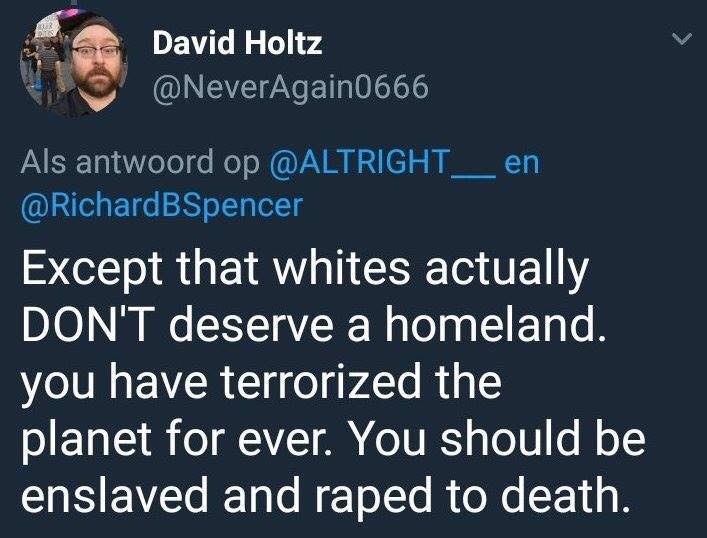
American White Nationalist Worst Fear. It may come true for them. Karma is a Bitch.
Comment
-
Comment
-

Comment
-
Comment
-

Comment
-

Comment
-
Honorary Whites Status
Honorary whites is a term that was used by the apartheid regime of South Africa to grant almost all of the rights and privileges of whites to those who would otherwise been treated as non-whites. This was made on a case by case basis to select individuals but also to groups of people, most notably East Asians who were ascribed as honorary whites. Japanese, Koreans and Taiwanese were granted this honorary white status, and later on the Chinese and individually designated figures of various other races were added as well.
https://en.wikipedia.org/wiki/Honorary_whites
The designation was ascribed to all Japanese people (who also once were ascribed as Honorary Aryans by Nazi Germany) in the 1960s. This designation assisted a trade pact formed between South Africa and Japan in the early 1960s when Tokyo's Yawata Iron & Steel Co. offered to purchase 5 million tonnes of South African pig iron, worth more than $250 million, over a 10-year period.[1]
With such a huge deal in the works, Prime Minister Hendrik Verwoerd determined that it would be tactless and disadvantageous to trade arrangements to subject the Japanese people to the same restrictions as other ethnicities because trade delegations from Japan would regularly visit South Africa for business.
Afterward, Pretoria's Group Areas Board publicly announced that all Japanese people would be considered white. Johannesburg's city officials even decided that, "in view of the trade agreements", the municipal swimming pools would be open to all Japanese guests.[1]
The designation gave Japanese almost all of the same rights and privileges as whites (except for the right to vote; they were also exempt from conscription). Until the early 1970s, opposition party politicians and the press questioned why Japanese were granted special privileges, citing inconsistencies with apartheid.[2]
The new designation granted to the Japanese seemed grossly unfair to South Africa's small Chinese community (roughly 7,000 at that time), who it seemed, would enjoy none of the new benefits given to the Japanese. As Time reported one of Cape Town's leading Chinese businessmen's saying "If anything, we are whiter in appearance than our Japanese friends." Another indignantly demanded: "Does this mean that the Japanese, now that they are [considered] White, cannot associate with us without running afoul of the Immorality Act?"[1]
Inclusion of other East Asians as honorary whites (Japanese, South Korean and especially Taiwanese) complicated matters on how the Chinese were treated, and apartheid regulation on Chinese varied from department to department and province to province as locals could not distinguish these Asians apart from each other.
In 1984, the Group Areas Act was amended to allow Chinese South Africans to live in areas the government had declared white areas and use the facilities within them.[3] Chinese South Africans were required to apply for a permit from the government in order to move into a white area. Permission had to be obtained from all the neighbours in the suburb for the application to be accepted.[4][5]
South Koreans
Main article: Koreans in South Africa
Unlike Japan, South Korea was unwilling to establish diplomatic relations with South Africa because of apartheid.[6] South Africa offered honorary white status to South Korean citizens when the two countries negotiated diplomatic relations in 1961. South Korea severed ties with South Africa in 1978 in protest against apartheid, and full diplomatic relations between the two countries were not reestablished until 1992.[7]
Taiwanese
Main article: Chinese South Africans § Immigration from Taiwan
The inclusion of Taiwanese was due to the important relations between South Africa and Taiwan.[3][8] By 1979, Taiwan had become South Africa's fifth largest trading partner. As South Africa continued to support the Chinese Nationalists even after the Chinese Communist Party gained control of the mainland, the relations of the two warmed as both were isolated from the international community.[2]Comment
-

 Unvaxxed, still alive.
Comment
-

Comment
-
Just as long as they make the southern states pay.
I want reparation for having to put up with Trump supporters.Comment
-
↑↑↑↑ Anecdotal.
an·ec·do·tal
/ˌanəkˈdōdl/
Learn to pronounce
adjective
(of an account) not necessarily true or reliable, because based on personal accounts rather than facts or research.
↓↓↓↓ Not anecdotal.
The black population: At 41.6 percent, blacks were more likely to participate in government assistance programs in an average month. The black participation rate was followed by Hispanics at 36.4 percent, Asians or Pacific Islanders at 17.8 percent, and non-Hispanic whites at 13.2 percent.
{source}
Comment
-
-
Comment
-
Honorary Whites Status
Maybe African Americans and Hispanic Americans can get the same Status in America
Honorary whites is a term that was used by the apartheid regime of South Africa to grant almost all of the rights and privileges of whites to those who would otherwise been treated as non-whites. This was made on a case by case basis to select individuals but also to groups of people, most notably East Asians who were ascribed as honorary whites. Japanese, Koreans and Taiwanese were granted this honorary white status, and later on the Chinese and individually designated figures of various other races were added as well.
https://en.wikipedia.org/wiki/Honorary_whites
The designation was ascribed to all Japanese people (who also once were ascribed as Honorary Aryans by Nazi Germany) in the 1960s. This designation assisted a trade pact formed between South Africa and Japan in the early 1960s when Tokyo's Yawata Iron & Steel Co. offered to purchase 5 million tonnes of South African pig iron, worth more than $250 million, over a 10-year period.[1]
With such a huge deal in the works, Prime Minister Hendrik Verwoerd determined that it would be tactless and disadvantageous to trade arrangements to subject the Japanese people to the same restrictions as other ethnicities because trade delegations from Japan would regularly visit South Africa for business.
Afterward, Pretoria's Group Areas Board publicly announced that all Japanese people would be considered white. Johannesburg's city officials even decided that, "in view of the trade agreements", the municipal swimming pools would be open to all Japanese guests.[1]
The designation gave Japanese almost all of the same rights and privileges as whites (except for the right to vote; they were also exempt from conscription). Until the early 1970s, opposition party politicians and the press questioned why Japanese were granted special privileges, citing inconsistencies with apartheid.[2]
The new designation granted to the Japanese seemed grossly unfair to South Africa's small Chinese community (roughly 7,000 at that time), who it seemed, would enjoy none of the new benefits given to the Japanese. As Time reported one of Cape Town's leading Chinese businessmen's saying "If anything, we are whiter in appearance than our Japanese friends." Another indignantly demanded: "Does this mean that the Japanese, now that they are [considered] White, cannot associate with us without running afoul of the Immorality Act?"[1]
Inclusion of other East Asians as honorary whites (Japanese, South Korean and especially Taiwanese) complicated matters on how the Chinese were treated, and apartheid regulation on Chinese varied from department to department and province to province as locals could not distinguish these Asians apart from each other.
In 1984, the Group Areas Act was amended to allow Chinese South Africans to live in areas the government had declared white areas and use the facilities within them.[3] Chinese South Africans were required to apply for a permit from the government in order to move into a white area. Permission had to be obtained from all the neighbours in the suburb for the application to be accepted.[4][5]
South Koreans
Main article: Koreans in South Africa
Unlike Japan, South Korea was unwilling to establish diplomatic relations with South Africa because of apartheid.[6] South Africa offered honorary white status to South Korean citizens when the two countries negotiated diplomatic relations in 1961. South Korea severed ties with South Africa in 1978 in protest against apartheid, and full diplomatic relations between the two countries were not reestablished until 1992.[7]
Taiwanese
Main article: Chinese South Africans § Immigration from Taiwan
The inclusion of Taiwanese was due to the important relations between South Africa and Taiwan.[3][8] By 1979, Taiwan had become South Africa's fifth largest trading partner. As South Africa continued to support the Chinese Nationalists even after the Chinese Communist Party gained control of the mainland, the relations of the two warmed as both were isolated from the international community.[2]Comment
-

Only American Nationalist Whites like Onehunglo and escostupdio. Here in Europe things like this don't happen.Comment
-
How come Mexicans don't ask for reparations from the Spics? The Spics did so much raping and killing of Indians they created a new race.opinions are like assholes.................
"They aren't after me, they are AFTER YOU! Im just in their way"
-D.J. TrumpComment
-
If legislation for reparations passes, people claiming to be of black American ancestry will come crawling out of the woodwork.
 Support American Heroes | How Bad is My Batch? | Vaccine Deaths & Adverse Reactions | Free Speech Coalition | <WARNING> ePayService / Guerra Capital, INC / MTACC payments | Flirt4Free Fucks their Affiliates | Don't do business with piece of shit Andy Alvarez from Webmaster Central / VR3000, who said:
"If it was up to me, they would have shot all 30,000 of those country loving shitheads"Comment
-
 .
.
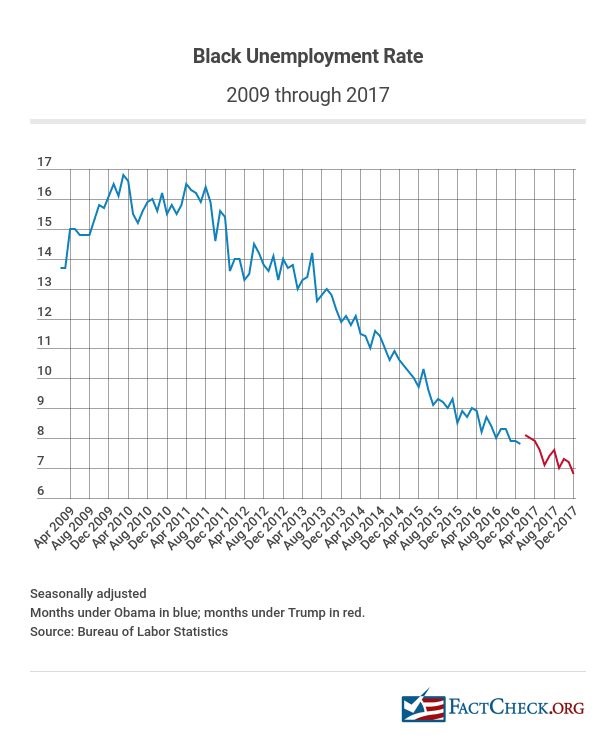
Yes, fewer illegal immigrants working equates to more job opportunities for American citizens.
RochardComment



Comment