
After 21 years and nearly 7 million cars, Ford is giving up on its iconic car

AP Associated Press
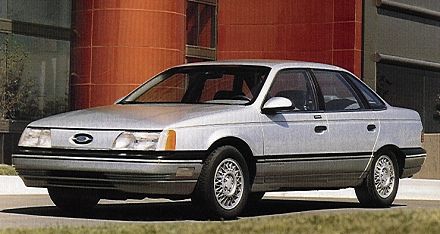
DEARBORN, Mich. - Sometime next week, the assembly line at a Ford plant near Atlanta will come to a halt, signaling the end of a family sedan so revolutionary that its 1985 debut changed forever the way cars look, feel and drive.
Say goodbye to the Taurus.
After 21 years and sales of nearly 7 million cars, Ford Motor Co. is giving up on what some call the most influential automobile since Henry Ford's Model T. The Taurus is credited with moving America away from boxy V-8 powered gas-guzzling bedrooms-on-wheels to aerodynamic, more efficient cars with crisper handling.
To many, the Taurus' death was slow and painful as Ford in recent years abandoned the car that saved the company, focusing instead on high-profit trucks and sport utility vehicles.
"When that thing came out, it was a big deal," said Robert Thompson, professor of popular culture at Syracuse University. "It so much became kind of the template of what a modern car was going to look like."
The Taurus, so futuristic that critics called it a "jellybean" or a "flying potato," made its debut late in 1985, with 1979 gasoline shortages still fresh in consumers' minds. The U.S. economy was just pulling out of a downturn when the scalloped Taurus, initially equipped with V-6 and four-cylinder engines, hit showrooms. It was an immediate hit, with buyers snapping up more than 263,000 in 1986, its first full year on the market.
It became the best-selling car in America in 1992 with sales of nearly 410,000, unseating the Honda Accord just as Japanese imports were starting to take hold in the U.S., and it held the top spot for five straight years until it was supplanted by the Toyota Camry in 1997. Even near death in September, it remained Ford's top-selling car.
Ford also sold another 2 million Mercury Sables, the Taurus' nearly identical twin.
Dominated the sedan segment
"It was really the last full-size American passenger sedan to dominate the segment," said Jim Sanfilippo, senior industry analyst for Bloomfield Hills-based Automotive Marketing Consultants Inc.
Ford was losing billions in the early 1980s when Taurus was just an idea. Philip Caldwell, chief executive at the time, challenged designers and engineers to come up with a radically different car that would return Ford to profitability.
"We were in terrible condition financially," recalled Jack Telnack, chief designer on the original Taurus who retired in 1998. "He said `Look, we need something really different, really new, that will kind of set the pace out there.' "
Nearly 1,000 people worked on the car, many coming from Ford's European operations. They had spotted a trend that U.S. buyers were moving away from big, cushy cars to better-handling European models, Telnack said.
AP Associated Press
DEARBORN, Mich. - Sometime next week, the assembly line at a Ford plant near Atlanta will come to a halt, signaling the end of a family sedan so revolutionary that its 1985 debut changed forever the way cars look, feel and drive.
Say goodbye to the Taurus.
After 21 years and sales of nearly 7 million cars, Ford Motor Co. is giving up on what some call the most influential automobile since Henry Ford's Model T. The Taurus is credited with moving America away from boxy V-8 powered gas-guzzling bedrooms-on-wheels to aerodynamic, more efficient cars with crisper handling.
To many, the Taurus' death was slow and painful as Ford in recent years abandoned the car that saved the company, focusing instead on high-profit trucks and sport utility vehicles.
"When that thing came out, it was a big deal," said Robert Thompson, professor of popular culture at Syracuse University. "It so much became kind of the template of what a modern car was going to look like."
The Taurus, so futuristic that critics called it a "jellybean" or a "flying potato," made its debut late in 1985, with 1979 gasoline shortages still fresh in consumers' minds. The U.S. economy was just pulling out of a downturn when the scalloped Taurus, initially equipped with V-6 and four-cylinder engines, hit showrooms. It was an immediate hit, with buyers snapping up more than 263,000 in 1986, its first full year on the market.
It became the best-selling car in America in 1992 with sales of nearly 410,000, unseating the Honda Accord just as Japanese imports were starting to take hold in the U.S., and it held the top spot for five straight years until it was supplanted by the Toyota Camry in 1997. Even near death in September, it remained Ford's top-selling car.
Ford also sold another 2 million Mercury Sables, the Taurus' nearly identical twin.
Dominated the sedan segment
"It was really the last full-size American passenger sedan to dominate the segment," said Jim Sanfilippo, senior industry analyst for Bloomfield Hills-based Automotive Marketing Consultants Inc.
Ford was losing billions in the early 1980s when Taurus was just an idea. Philip Caldwell, chief executive at the time, challenged designers and engineers to come up with a radically different car that would return Ford to profitability.
"We were in terrible condition financially," recalled Jack Telnack, chief designer on the original Taurus who retired in 1998. "He said `Look, we need something really different, really new, that will kind of set the pace out there.' "
Nearly 1,000 people worked on the car, many coming from Ford's European operations. They had spotted a trend that U.S. buyers were moving away from big, cushy cars to better-handling European models, Telnack said.


 sad to see the taurus go
  Signature For Sale







Comment